

 13,000+ Reviews | 4.5
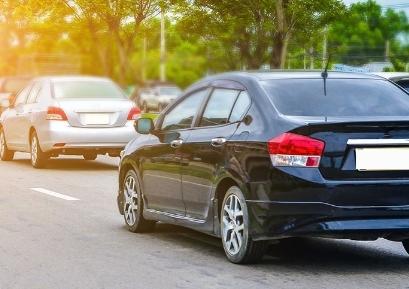
Driving in Aurora, Ontario means sharing the road with everything from school-drop-off traffic on Wellington Street East to commuter flows toward Highway 404, plus the winter realities of ice, blowing snow, and reduced visibility across York Region. In that context, “car insurance” is not just a legal requirement—it is a structured risk-transfer contract governed by Ontario’s standard auto policy (OAP 1) and shaped by a mix of mandatory coverages, optional endorsements, deductibles, and underwriting rules.
Understanding your car insurance coverage options in Aurora is the first step toward buying a policy that actually performs when you need it. Ontario is often described as “no-fault,” but that label can be misleading: you typically claim many benefits through your own insurer regardless of fault, while liability and the right to sue still matter for serious losses. The practical result is that policy structure matters—limits, endorsements, and deductibles can be the difference between a manageable claim and a financially destabilizing one.
This guide explains Ontario-specific coverages and how Aurora drivers can evaluate car insurance quotes, control cost without hollowing out protection, and build a policy aligned with real-world exposures (commuting, multi-vehicle households, financed vehicles, teen drivers, and winter driving).
The Ontario Framework: What “No-Fault” Really Means
Ontario’s auto insurance system blends:
-
First-party benefits you claim from your own insurer (most notably Statutory Accident Benefits) regardless of who caused the crash.
-
Liability coverage that responds when you are legally responsible for injuring someone or damaging their property.
-
Property damage mechanisms (notably DCPD) that often route vehicle damage claims through your own insurer when another Ontario-insured driver is at fault.
For Aurora drivers, the takeaway is simple: your policy is not just “coverage for what you do to others.” It is a multi-part instrument that can pay for income replacement, medical and rehabilitation costs, vehicle repairs, rental replacement, and legal defence—depending on the choices you make at purchase time.
Mandatory Coverages in Ontario (The Non-Negotiables)
In Ontario, standard auto policies include several mandatory coverages. The names matter because they map directly to how claims are adjusted and paid.
Third-Party Liability
Third-party liability protects you if you are legally responsible for injuring someone or damaging their property. It also pays for your legal defence if you are sued.
Minimums: Ontario’s legal minimum liability limit is relatively low (often cited as $200,000), but many drivers carry $1,000,000 to $2,000,000 because liability losses escalate quickly (multiple claimants, long-term impairment, legal costs, and high-value property damage scenarios).
Aurora-specific decision point: If you regularly drive in dense GTA traffic corridors, have a longer commute, or own a home with attachable assets, a higher liability limit is typically a rational hedge.
Statutory Accident Benefits (SABS)
Statutory Accident Benefits (commonly “Accident Benefits”) are a defining feature of Ontario auto insurance. They can pay benefits to you, your passengers, and certain others, regardless of fault, including (depending on eligibility and severity):
-
Medical and rehabilitation expenses not covered elsewhere
-
Attendant care (for more serious impairments)
-
Income replacement if you cannot work due to injury
-
Non-earner benefits in limited circumstances
-
Caregiver and housekeeping/home maintenance benefits in specific scenarios
Accident Benefits are complex and highly fact-dependent. For policy shopping purposes, the key is that Ontario permits optional increases to certain Accident Benefits limits. If your household would be financially exposed by an extended work interruption or substantial rehab costs, reviewing optional SABS upgrades is not optional in any practical sense.
Direct Compensation–Property Damage (DCPD)
DCPD is an Ontario coverage that often pays for damage to your vehicle (and certain contents) when another Ontario-insured driver is at fault (fully or partially). You claim through your own insurer, which can streamline the repair process.
Important nuance: DCPD generally depends on an Ontario-to-Ontario insured vehicle collision scenario. If an out-of-province vehicle is involved, or if fault circumstances differ, the claim handling pathway may change.
Uninsured Automobile
This coverage can respond if you are injured (or, in certain cases, killed) by an uninsured driver, or in some hit-and-run scenarios where the at-fault driver cannot be identified. It can also provide limited property damage protection in specified situations.
Physical Damage Coverages: Protecting Your Own Vehicle
Mandatory coverages do not automatically mean your own vehicle is repaired in every scenario. That is the domain of physical damage coverages, chosen based on vehicle value, financing terms, risk tolerance, and deductible strategy.
Collision or Upset
Collision or Upset pays to repair or replace your vehicle if it is damaged in a collision with another vehicle or object, or if it rolls over—typically regardless of fault (subject to policy terms). You choose a deductible (often $500, $1,000, or higher).
-
Example: Sliding on black ice near an Aurora intersection and striking a curb or another vehicle.
-
Deductible mechanics: If repairs cost $6,200 and you have a $1,000 deductible, you pay $1,000 and the insurer pays the remainder (subject to valuation and policy conditions).
Comprehensive
Comprehensive covers many non-collision losses such as theft, vandalism, fire, falling objects, glass damage, and weather events (which can include wind and hail). In Ontario, comprehensive is especially relevant for theft and vandalism exposures, and for storm-related claims depending on local patterns.
-
Example: Vehicle theft, catalytic converter theft, break-ins, or a severe windstorm causing damage from debris.
Specified Perils and All Perils
Ontario policies may also offer:
-
Specified Perils: A named-perils approach that covers only the listed causes of loss (often cheaper, narrower).
-
All Perils: A broader option combining collision and comprehensive-style protections with certain theft provisions, typically subject to exclusions and deductibles.
These options matter most when you are engineering cost: they are not interchangeable, and the cheapest form can be the one that fails to respond to the loss you actually experience.
What People Mean by “Full Coverage” in Ontario
“Full coverage” is not a defined legal term in Ontario. In everyday use, it usually means:
-
Mandatory coverages (including liability, Accident Benefits, DCPD, uninsured automobile), plus
-
Physical damage coverage (often collision + comprehensive or an all-perils form).
It typically does not automatically include rental replacement, waiver of depreciation, roadside assistance, or enhanced Accident Benefits—those are usually add-ons.
Optional Endorsements and Add-Ons Aurora Drivers Commonly Evaluate
Ontario’s endorsement system (OPCF forms) is where many meaningful “coverage upgrades” live. Your insurer or broker can quote these explicitly. The correct choice depends on vehicle age, financing, commuting patterns, and household risk.
Loss of Use / Rental Replacement (often OPCF 20)
If your vehicle is in the shop after a covered loss, rental replacement can pay for a rental car (or alternate transportation) up to specified daily and maximum limits. In practice, repair timelines can stretch due to parts availability, shop capacity, and claim volume after storms.
For Aurora commuters who rely on a vehicle to reach work, school, or regional transit hubs, rental coverage is typically one of the highest “real-life utility” add-ons in the policy.
Waiver of Depreciation (often OPCF 43 / 43A)
If you buy or lease a newer vehicle, waiver of depreciation can materially improve claim outcomes after a total loss (or sometimes certain partial losses, depending on wording). Instead of receiving actual cash value, you may receive the purchase price or replacement cost as defined by the endorsement, provided conditions are met.
This is conceptually similar to “new car replacement” protections, and it can be financially decisive in the first years of ownership.
Family Protection / Underinsured Motorist (often OPCF 44R)
Ontario’s structure can still leave gaps when another driver is inadequately insured relative to your losses. Family Protection endorsements can provide additional protection if you or an insured person is injured by a driver with insufficient liability limits.
For households with higher earning power or greater long-term exposure, this can be an important second layer of protection beyond the other party’s limits.
Liability for Damage to Non-Owned Automobiles (often OPCF 27)
If you rent or borrow vehicles, this endorsement can provide coverage for damage to a non-owned vehicle. It can be a cost-effective alternative to buying a rental agency’s damage waiver every time—though you should compare terms and exclusions carefully.
Roadside Assistance
Not always an OPCF endorsement, roadside assistance can cover towing, battery service, lockout assistance, and fuel delivery. In an Ontario winter, the value proposition is largely about avoiding out-of-pocket towing and reducing downtime when conditions are unsafe.
Choosing Limits and Deductibles: The Engineering Layer of Your Policy
When shoppers compare car insurance quotes in Aurora, two quotes can look similar while containing materially different financial design choices. The most important levers are liability limits, Accident Benefits options, and deductibles.
Liability Limits: Why $1M vs $2M Is Not a Cosmetic Choice
Liability claims scale with severity and duration: catastrophic impairment, future care costs, and legal expenses are not abstract risks. The difference between $1M and $2M can be modest in premium compared with the downside of an underinsured liability event. Many Ontario households treat $2M as the “sleep-at-night” threshold, especially if they drive frequently in high-density corridors.
Deductibles: Premium Savings vs Claim Friction
Higher deductibles can reduce premium and help you reach affordable car insurance pricing, but only if the deductible is truly affordable at claim time. A practical approach is to set deductibles at a level your household can pay immediately (without borrowing), and then optimize premium using discounts and underwriting choices rather than shifting too much loss back onto yourself.
Cost Drivers in Aurora (Ontario) and York Region
Auto insurance pricing in Ontario is data-driven and can vary significantly between households. Factors commonly affecting Aurora rates include:
-
Postal code–based loss experience: claim frequency and severity in your rating territory
-
Vehicle characteristics: repair costs, theft attractiveness, safety features, parts availability
-
Driver profile: years licensed, convictions, at-fault accidents, claims history
-
Usage: annual kilometres, commute distance, business use vs personal use
-
Policy structure: deductibles, endorsements, limits, and optional Accident Benefits
How to Lower Premiums Without Hollowing Out Coverage
-
Bundle policies: Auto + home/tenant can yield meaningful multi-line discounts.
-
Adjust deductibles strategically: raise them only to a level you can pay immediately.
-
Use telematics only if it suits your driving pattern: usage-based programs can reduce cost for consistently low-risk driving behaviours.
-
Re-evaluate physical damage on older vehicles: at some point, collision/comprehensive may be economically irrational relative to vehicle value, but the decision should be explicit.
-
Ask about all discounts: winter tires (where offered), multi-vehicle, alumni/association, professional group, claims-free, conviction-free, and payment plan discounts.
Teen Drivers and New Drivers in Aurora
Adding a teen or newly licensed driver is one of the largest predictable premium increases in a household. Mitigation options (varies by insurer) often include:
-
Driver training completion (recognized programs may reduce rates)
-
Good student discounts
-
Vehicle choice discipline: insure the teen primarily on a vehicle with a strong safety profile and lower repair cost
-
Telematics where a driver’s behaviour profile is likely to score well
The goal is not merely cheaper premium; it is to keep liability limits and core protections intact while controlling the “risk signal” that underwriters see.
Financed and Leased Vehicles: Where Coverage Requirements Tighten
If your vehicle is leased or financed, your lender typically requires physical damage coverage. The more subtle exposure is valuation: if the vehicle is totaled, a base policy generally pays actual cash value, which can be misaligned with what you owe in the early years of a loan.
In Ontario, drivers often address this with waiver of depreciation (where eligible) or lender/lessor products. The correct solution depends on vehicle age, how the endorsement is worded, and how quickly the loan amortizes.
How Claims Typically Work in Ontario (Practical Steps)
If you are in a collision in Aurora:
-
Prioritize safety and call emergency services if needed.
-
Document the scene: photos, road conditions, vehicle positions, damage, and identifying details.
-
Exchange information: driver’s licence, insurance details, vehicle ownership, and contact info.
-
Report promptly to your insurer. Many benefits and repairs pathways are triggered through your own carrier (especially Accident Benefits and often DCPD).
-
Follow reporting requirements: if required, attend a collision reporting centre and obtain the relevant documentation.
For comprehensive-type losses (theft, vandalism, storm damage), early reporting can improve outcomes by speeding up appraisal, repair scheduling, and rental replacement arrangements if you carry that coverage.
Shopping for Car Insurance in Aurora: A Quote Comparison Checklist
To compare car insurance quotes intelligently, ensure each quote matches on:
-
Third-party liability limit (e.g., $1M vs $2M)
-
Deductibles for collision and comprehensive (or all perils)
-
Rental replacement / loss of use limits
-
Whether waiver of depreciation is included and eligible
-
Accident Benefits options (base vs increased)
-
Any OPCF endorsements (OPCF 20, 27, 43/43A, 44R) and their exact wording
If you only compare premium, you risk selecting the quote that is “cheap” because it quietly removed a coverage that will matter later. Cheap car insurance is only a win if the policy is still structurally competent.
Conclusion
Aurora drivers operate in an Ontario system where the architecture of the policy—mandatory coverages, DCPD pathways, Accident Benefits structure, and optional OPCF endorsements—determines whether a claim is merely inconvenient or financially destabilizing.
Start by choosing a liability limit that matches your household exposure, then align physical damage coverages with your vehicle’s value and financing status. Evaluate rental replacement, waiver of depreciation, and family protection endorsements as deliberate risk decisions, not afterthoughts. Finally, when comparing car insurance quotes in Aurora, compare on identical limits and deductibles so the price difference reflects the insurer’s rating—not hidden reductions in coverage.
With a properly structured Ontario policy, you can pursue genuinely affordable car insurance outcomes through smart discounts, disciplined deductible choices, and transparent quote comparisons—without sacrificing the protections that matter most when something goes wrong on the road.