facebook pixel

Western Financial Group offices will be closed Monday, February 17 in observance of Family Day. We will reopen on Tuesday, February 18. For emergency claims, please call 1-877-599-7299.

restaurant insurance Canada

Fast · Simple · Trusted
Get the Best Insurance Rates for your Restaurant

Start your 3-minute, no-obligation quote today and get personalized advice from our licensed insurance brokers.
Canada flag 100% Canadian Owned
Serving Customers since 1905
Google

13,000+ Reviews Across Western | 4.5

★★★★★

Coverage Guide

Restaurant Insurance Coverage in Canada

Operating a restaurant in Canada involves more than serving great food; it means managing risks that can impact your business every day. From kitchen fires and equipment failures to customer injuries, food contamination, and unexpected closures, even a single incident can lead to significant financial losses.

Restaurant insurance provides comprehensive protection by helping cover property damage, liability claims, lost income, equipment breakdowns, and other unexpected events, allowing you to focus on running your business with confidence.

It typically includes Commercial General Liability (CGL), Commercial Property Insurance and Worker's Compensation to cover losses from fire, theft, vandalism, and third-party injury or property damage. Many restaurants usually add optional insurance like Food Spoilage CoverageEquipment Breakdown Insurance, Business Interruption Insurance, Liquor Liability (if alcohol is served), and Cyber Insurance.

Mandatory Optional

Workers' Compensation

Restaurants are responsible for providing a safe workplace, and in most Canadian provinces, employers are required to register with their provincial workers' compensation board. This coverage helps provide wage replacement, medical benefits, and rehabilitation support for employees who suffer work-related injuries or illnesses while helping protect employers from certain legal actions related to workplace injuries.

Example:

A line cook suffers a serious burn while preparing food and requires medical treatment and time away from work. Workers' compensation helps cover eligible medical expenses, wage replacement, and rehabilitation benefits while helping protect the employer from certain workplace injury claims.

Commercial General Liability (CGL)

Protects your restaurant from third-party claims involving bodily injury, property damage, and legal expenses.

While not explicitly written into federal law, commercial landlords absolutely mandate a minimum of $2 million to $5 million in CGL coverage before signing a commercial lease.

Example:

A customer slips and falls inside your restaurant and files a claim for medical expenses. Liability coverage can help cover legal costs and eligible settlement expenses.

Commercial Property Insurance

Covers your restaurant’s physical assets, including the building (if owned), equipment, furniture, inventory, and supplies against covered losses such as fire, theft, or certain types of damage.

Example:

A kitchen fire damages ovens, refrigeration units, and restaurant furniture. Property coverage helps pay for repairs or replacement.

Liquor Liability (If Serving Alcohol)

Provides protection for risks associated with serving alcohol, including claims related to intoxicated customers.

If your restaurant has an active provincial liquor license you are legally required to carry liquor liability coverage to maintain that license.

Example:

A guest leaves your restaurant after drinking and causes an accident. Liquor liability coverage may help respond to related claims, depending on policy terms.

Equipment Breakdown Insurance

Protects against unexpected failures of essential restaurant equipment, such as ovens, refrigeration systems, and cooking equipment.

Example:

A refrigeration system fails and causes food spoilage. Equipment breakdown coverage can help with repair costs and certain related losses.

Food Spoilage Insurance

Helps protect against losses when food inventory is damaged due to equipment failure, power outages, or other covered events.

Example:

A freezer malfunction causes thousands of dollars of inventory to spoil. Coverage can help reimburse eligible losses.

Business Interruption Insurance

Helps replace lost income and cover eligible expenses if your restaurant must temporarily close due to a covered event.

Example:

A major fire forces your restaurant to close for several weeks. Business interruption coverage helps offset lost revenue and ongoing expenses during the closure.

Cyber Insurance

Protects against cyber risks such as payment card breaches, customer data exposure, ransomware, and online fraud.

Example:

A data breach compromises customers’ payment information. Cyber insurance can help cover investigation, notification, legal, and recovery costs.

Example:

How Restaurant Insurance Works in Canada

Why Restaurants Need Robust Insurance to Survive Everyday Risks

Restaurant insurance is designed to protect restaurants from risks and liabilities that they face involving their customers, suppliers, and members of the public. Incidents can lead to lawsuits and costly repairs. Restaurant Isnurance provides coverage for unforeseen events such as fire, theft, vandalism, cyberattacks, and severe weather and helps financially protect restaurant owners against legal action.

From customer slip-and-fall accidents and foodborne illness claims to kitchen fires, equipment breakdowns, and employee injuries, unexpected incidents can result in costly repairs, legal expenses, and lost income. Comprehensive insurance helps protect the restaurant's property, employees, and customers while providing financial support if the business must temporarily close due to a covered event.

If a covered incident occurs, the insured party files a claim with the insurer. The insurer investigates the loss and, if approved, pays for covered damages, legal costs, or repairs after deductibles are applied.

Know your baseline

Understand Your Contract Requirements & Risks

Restaurants should understand their insurance requirements before purchasing coverage. Lease agreements, catering contracts, franchise agreements, and vendor partnerships may require specific coverage limits, additional insured status, or policy endorsements. Having insurance alone may not be enough if your policy doesn't meet these contractual obligations.

Audit your risks first, proper coverage starts with knowing your exposures.
Avoid underinsurance

Exclusions to Watch For

Standard restaurant insurance policies may exclude or limit coverage for losses resulting from wear and tear, poor maintenance, mold, pollution, flooding, earthquakes, cyber incidents, employee dishonesty, liquor liability (unless specifically purchased), and certain food contamination or spoilage events. Some policies also exclude damage caused by utility failures, equipment breakdown, or sewer backups unless additional coverage is added.

The right coverage and endorsements can help protect your restaurant from costly insurance gaps.
Why comparing matters

Aligning Coverage With Your Restaurant's Needs

Restaurant insurance policies are not all the same, and similar premiums can provide very different levels of protection. Comparing policies helps identify differences in coverage limits, exclusions, deductibles, and optional endorsements such as equipment breakdown, food spoilage, cyber liability, liquor liability, and business interruption coverage.

Comparing policy terms and coverage options helps ensure your business has the protection it needs.

Why Western

Why Canadians Choose Western Financial

For more than a century, Western Financial Group has delivered trusted, people-first protection to over a million Canadians. We believe in doing insurance the right way, with integrity, care, and community at heart.

Proudly BBB Accredited with an A+ Rating

We’re accredited by the Better Business Bureau (BBB), which means we meet high standards for trust, transparency, and customer service.

Better Business Bureau Accredited Business A+ Rating

That commitment has earned us national and regional recognition across employer culture, customer experience, innovation, and social impact. Our awards reflect the quality of our service, the strength of our team, and the depth of our engagement in communities coast to coast.

What Our Trusted Customers Are Saying

13,000+ Reviews Across Western | 4.5

★★★★★
CD

Christine D.

Schomberg, ON

★★★★★

"Western Financial went above and beyond to support my small business, helping me find the right insurance coverage within a very short time frame. I was able to get everything in place quickly and get on the ice without delay. I truly appreciate their knowledge, responsiveness, and dedication. Highly recommend!"

BH

Brittany H.

Cranbrook, BC

★★★★★

"My husband and I use Western for all our auto, business, and travel insurance needs. They have been particularly helpful with advising us on insurance for our small construction company, and we feel very well prepared in the event we would need to make a claim. Kudos to the Cranbrook Western team!"

LD

Laurie D.

Red Deer, AB

★★★★★

"We have been with Western Financial for several years and would highly recommend using them. Our experience has been exceedingly easy, organized, and professional. Our broker has taken all of the guess work, stress, confusion, and anxiety out of dealing with commercial insurance. If you are not happy with your coverage or brokerage it is worth giving these guys a call!"

Our Numbers Speak for Themselves

1 Million+
CUSTOMERS

Trusted by Canadians to protect what matters most.

2,500
EMPLOYEES

Our licensed advisors are ready to support you across Canada.

181
PHYSICAL LOCATIONS

Local branches across Canada providing in-person advice and support.

$9M+
COMMUNITY GIVEBACKS

Invested back into local communities through our foundation.

Ready to Save on Restaurant Insurance?

Get a personalized quote in minutes. Our licensed Insurance advisors are ready to find your best rate.

No obligation · Save up to 10%

Cost Factors

What Determines the Cost of Restaurant Insurance in Canada?

Restaurant insurance costs in Canada can vary based on the specific risks and needs of your business. Insurers look at factors such as your restaurant’s location, day-to-day operations, annual revenue, coverage requirements, and overall risk exposure when calculating your premium. By understanding what affects the cost of restaurant insurance, you can choose the right coverage for your business while avoiding unnecessary expenses.

Premiums depend on factors like:

  • Type of Restaurant  Fast food, cafés, fine dining, bars, and food trucks all have different risk profiles.
  • Annual revenue Higher sales typically increase the amount of coverage needed.
  • Location Insurance costs vary based on crime rates, weather risks, and local fire protection.
  • Building and contents value The cost to insure your building, kitchen equipment, furniture, and inventory affects your premium.
  • Number of employees More staff generally increases liability exposure and overall insurance costs.
  • Liquor sales Serving alcohol usually increases premiums due to additional liability risks.
  • Claims history Previous insurance claims may impact your premium.
  • Security and Safety Measures: Fire suppression systems, alarms, sprinklers, and security cameras may help reduce risk and potentially lower premiums.


Most Canadian restaurants and cafés typically pay between $1,800 and $4,500 per year for a standard restaurant insurance package.

Insurance Type Average Canadian Cost Primary Driver of Cost
Commercial General Liability CGL $100 - $120 / month Total annual customer volume and seating capacity.
Commercial Property Insurance $125+ / month Value of commercial kitchen assets and building age.
Liquor Liability Insurance $50 - $60 / month The exact ratio of alcohol sales to food sales.

Average premiums are estimates based on a standard insurance package and may vary depending on the specific restaurant risk factors outlined above.

Practical Tips for Restaurant Insurance Every Canadian Restaurant Owner Should Know

Make sure liquor liability is included if you serve alcohol

General liability coverage may not fully protect your business from alcohol-related claims unless appropriate coverage is added.

Liquor liability insurance typically costs around $50–$60 per month, with premiums influenced by factors such as your alcohol-to-food sales ratio and the level of coverage required.

Consider equipment breakdown coverage

Restaurants rely heavily on ovens, refrigerators, freezers, and other specialized equipment. Equipment breakdown coverage can help protect against unexpected repair or replacement costs.

Adding Equipment Breakdown coverage to an existing restaurant insurance package typically costs $250 to $600 annually (roughly $20 to $50 per month).

Get Free Expert Advice

Before choosing or renewing restaurant insurance, review your key coverages together, including general liability, property insurance, equipment breakdown, business interruption, and liquor liability, to ensure they work together without gaps or overlaps. Involving an experienced broker early can help identify risks, recommend the right coverage options, and prevent costly issues before they happen.

Review Key Policies Together and Involve Your Broker Early.

Regular Policy Reviews

Regularly review your restaurant insurance as your business changes and grows. Expanding your menu, adding delivery services, increasing sales, purchasing new equipment, hiring more employees, or making renovations can all affect your coverage needs. Updating your limits, endorsements, and policy details helps prevent unexpected gaps in protection.

Review and Update Your Insurance as Your Restaurant Grows.

Want to see how these factors impact your rate?

Compare quotes in minutes and find out exactly what you could save.

Ways to Save

Ways to Lower Your Restaurant Insurance

Restaurant insurance is an important investment, but there are several ways owners can manage premiums while maintaining proper protection. The following strategies can help reduce costs and improve your overall risk profile.

Discounts

Professional Association & Group Rate Discounts +

Professional Association and Group Rate Discounts are often available to members of industry associations, regulatory bodies, or approved affinity groups. Through partnerships with several industry associations, Western Financial Group provides access to group insurance programs and group benefits that offer preferred pricing, enhanced coverage options, and added value compared to standard individual policies.

Server Certification Credit +

Applied when 100% of front-of-house staff hold valid provincial responsible beverage certifications.

Monitored Security & Fire Credits Discount +

Unlocked by providing a formal Certificate of Alarm (COA) showing your premises feature a central-station monitored fire and burglary system.

Automatic Utility Shutoff Discount +

Earned if your kitchen fire suppression system is hardwired to automatically cut off gas and electrical pathways to the cooking line upon activation.

Claims-Free Loyalty Credit +

Restaurants that present a clean loss-run history (typically 3 to 5 consecutive years without a single payout) qualify for claims-free discounts. 

Multi-Policy Bundling Discount +

Bundling your CGL, commercial property, equipment breakdown, and other restaurant coverages into a single insurance package may help reduce your overall premium and simplify policy management.

Smart Savings Strategies

Work With a Broker +

Working with an insurance broker helps match your business risks with the right coverage options from multiple insurers. Since every restaurant has different needs based on operations, location, equipment, employees, and services offered, a broker can help identify coverage gaps and recommend policies that fit your specific risks.

In addition, brokers can help compare insurance options, negotiate pricing, explain policy terms, recommend appropriate endorsements, and provide support during the claims process to help ensure your restaurant receives the protection it needs.

Increase Your Deductible +

Choosing a higher deductible can lower your annual premium because you are taking on more of the smaller claim risk yourself. Just make sure the deductible is an amount you could comfortably pay if needed.

Improve Safety and Risk Management +

Strong food safety procedures, employee training, regular equipment maintenance, fire prevention measures, and security systems can reduce risks and may help lower premiums.

Ask About Discounts +

Not every discount is advertised. Ask your broker about claims-free discounts, loyalty pricing, multi-policy binding discounts, and new-client incentives.

Bundle & Save

Save up to 10%

Restaurants that bundle their policies can enjoy meaningful savings, simpler policy management, and one point of contact for their coverage needs.

  • Save up to 10% on your business insurance
  • Save up to $600 on personal car & home when you bundle with us
  • One broker, one renewal date, simpler management
  • Potential for combined deductibles on shared claims
  • Loyalty benefits that grow with tenure
Bundle and Save Today →
restaurant insurance canada

FAQ

Frequently Asked Questions

Who needs Restaurant Insurance in Canada? +

Restaurant insurance is recommended for any business involved in preparing, serving, or selling food and beverages. Whether you operate a small café, a family restaurant, a food truck, or a large hospitality business, insurance helps protect your operations from unexpected losses and liabilities.

Restaurant insurance is commonly needed by:

  • Restaurants and cafés: Protecting property, equipment, inventory, customers, and employees from common risks.
  • Bars and pubs: Covering additional risks related to alcohol service, including liquor liability exposure.
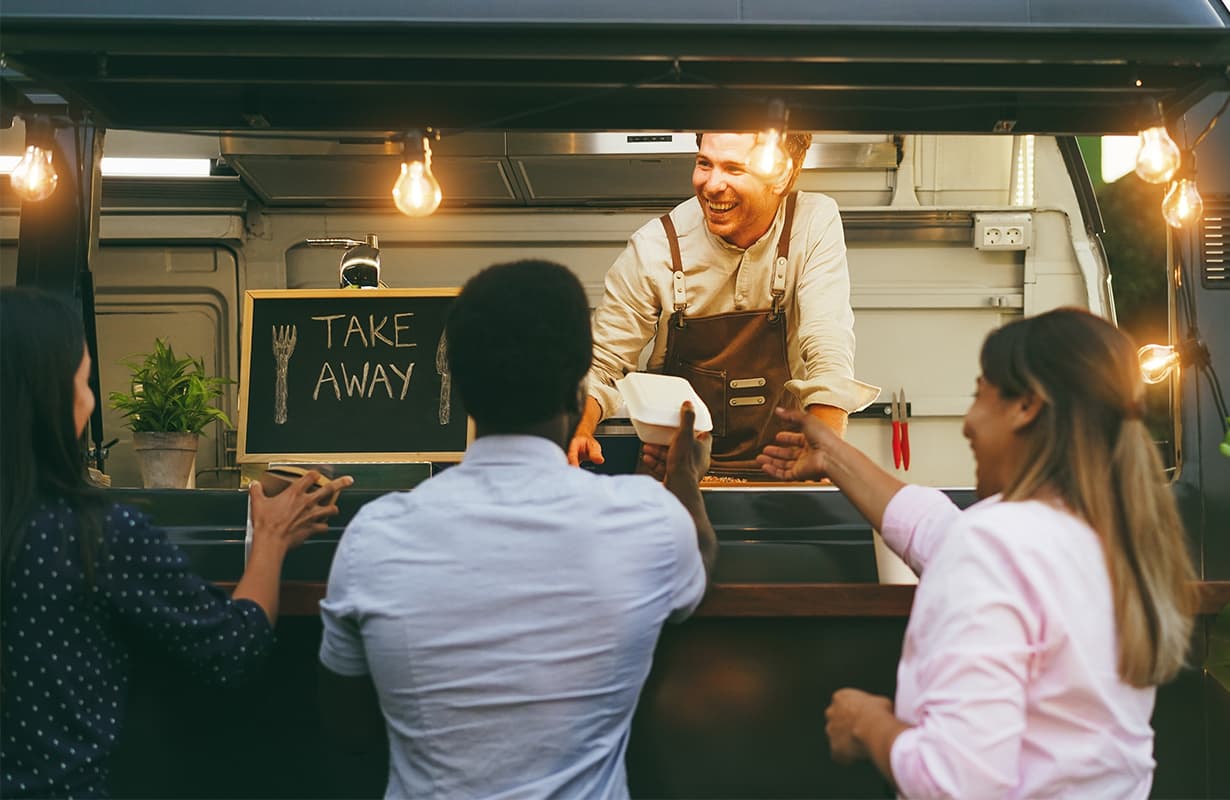
  • Food Trucks and mobile food businesses: Protecting vehicles, equipment, inventory, and operations at different locations.
  • Catering companies: Covering food preparation, transportation, events, and client-related risks.
  • Bakeries, bakery cafés, pizzerias and specialty food shops: Protecting equipment, products, and customer interactions.
  • Franchised restaurants: Meeting franchisor and landlord insurance requirements while protecting business assets.
  • Hospitality businesses with food services: Including hotels, inns, and other businesses offering dining or beverage services.

Even small food businesses can face significant risks, including customer injuries, property damage, equipment breakdowns, food contamination, theft, and business interruptions. The right insurance coverage helps protect your investment and keeps your business prepared for unexpected events.

What insurance does a restaurant need in Canada? +

Most restaurants need a combination of coverages, including commercial general liability, commercial property insurance, equipment breakdown coverage, business interruption insurance, and employee-related coverage. Additional protection, such as liquor liability, cyber liability, and food contamination coverage, may be needed depending on your operations.

How much does restaurant insurance cost in Canada? +

The cost of restaurant insurance varies based on factors such as location, restaurant type, annual revenue, number of employees, equipment value, coverage limits, and claims history. Many Canadian restaurants and cafés pay approximately $1,800 to $4,500 per year for a standard insurance package, but premiums can vary significantly depending on risk factors.

What factors affect the cost of restaurant insurance? +

Insurance premiums are influenced by the size and type of restaurant, sales volume, location, building and equipment value, alcohol sales, employee count, claims history, coverage limits, and risk management practices.

Are delivery services covered under restaurant insurance? +

Not always. If your restaurant offers delivery, catering, online ordering, or third-party delivery services, you should confirm that your policy covers these activities and update your insurer if your operations change.

What if my fast food restaurant delivers food via a third-party app and I get sued? +

As the business owner, the liability falls back on you for any products sold through any platform. Read through the agreement you have with the third-party delivery provider to see if there could be any terms and agreements that remove your liability once your fast food restaurant’s food enters the delivery car.

Does restaurant insurance cover food spoilage? +

Coverage for food spoilage depends on the policy. Some losses may be covered if they result from a covered event, such as equipment breakdown or power interruption, while other causes may require additional coverage.

What are the minimum insurance limits required by commercial landlords? +

Most commercial landlords require restaurant tenants to carry a minimum level of insurance before signing a lease. Requirements vary by landlord and location, but many typically require Commercial General Liability (CGL) coverage of $2 million to $5 million.

Should restaurant owners work with an insurance broker? +

No, using an independent broker like Western Financial Group does not cost you more. Brokers are paid via commissions directly from the insurance carriers, giving you access to multiple competitive quotes and expert advice at no extra fee.

Can I get a discount through a restaurant or hospitality association? +

Yes. Members of industry groups can access exclusive preferred pricing and pooled group benefits. For example, Western Financial Group partners with networks like Groupex Canada, the BCRFA, and ORHMA to offer hospitality members up to 10% premium reductions and enhanced coverage options.

Explore More

Other Insurance Products