


 13,000+ Reviews | 4.5
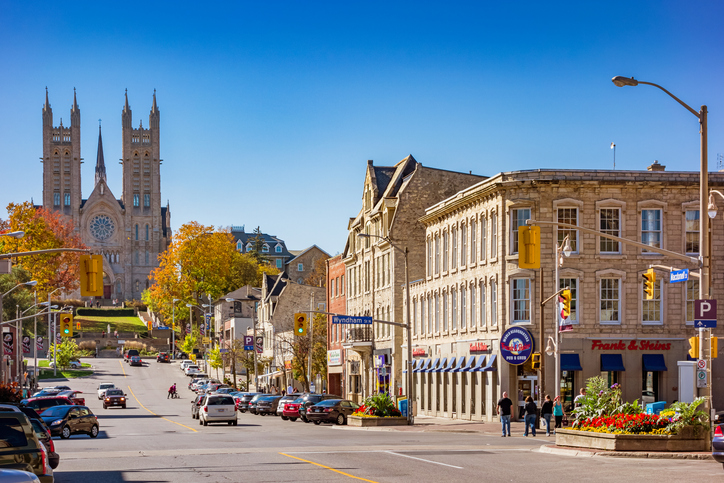
Navigating the world of auto insurance can often feel like driving through a dense fog without your high beams. For residents of the Royal City, understanding the nuances of local premiums is the first step toward significant annual savings. Guelph is a vibrant, growing city, balancing its historic charm with expanding modern infrastructure. However, as the city grows, so does the volume of traffic on the Hanlon Expressway and surrounding commuter routes, which inevitably impacts local insurance premiums.

Whether you are a lifelong resident, a newcomer drawn by the booming local economy, or a student navigating campus life, finding the right coverage at the right price is essential. When it comes to taking control of your financial well-being, having Guelph car insurance rates explained: what drivers need to know is an indispensable resource.
This comprehensive guide will demystify how your premiums are calculated, explain the external factors driving up costs across the province, and provide actionable, proven strategies to keep more money in your pocket.
The Auto Insurance Framework: Understanding the Rules of the Road
Before you can actively begin lowering your premiums, you need to understand the basic framework that governs auto policies in the province. Buying coverage isn't just a good idea—it is heavily regulated and legally required.
Provincial Regulations and FSRA
Every auto insurance policy sold in the province falls under strict regulatory oversight. The Financial Services Regulatory Authority of Ontario (FSRA) dictates how insurance companies operate, ensuring fair practices and financial stability within the market. It is highly recommended that drivers only do business with FSRA approved auto insurance companies in Guelph to ensure their coverage is valid, legally compliant, and financially backed in the event of a catastrophic claim. Insurance providers must apply to the FSRA to increase or decrease their baseline rates, meaning companies cannot arbitrarily double your premium overnight without regulatory approval based on statistical data.
Mandatory vs Optional Auto Insurance Coverage in Ontario
A major part of understanding your policy is knowing exactly what you are paying for. When reviewing your documents, you will notice that your coverage is split into two distinct categories: mandatory and optional. Understanding the difference between mandatory vs optional auto insurance coverage in Ontario is vital for customizing a policy that fits your budget without leaving you vulnerable.
Mandatory Coverage: By law, every driver in the province must carry four standard coverages:
-
Third-Party Liability: Protects you if you injure someone or damage their property while driving. The provincial minimum is $200,000, but virtually all experts recommend carrying at least $1 million to $2 million.
-
Statutory Accident Benefits (SABS): Provides compensation for medical expenses, rehabilitation, and loss of income if you are injured in an accident, regardless of who is at fault.
-
Direct Compensation - Property Damage (DCPD): Covers damage to your vehicle if you are in an accident where you are not entirely at fault. You deal directly with your own insurance company, streamlining the repair process. (Note: Recent legislative changes allow drivers to opt out of DCPD to save money, but doing so means paying entirely out of pocket if your car is totaled by someone else).
-
Uninsured Automobile Coverage: Protects you and your family if you are injured or your vehicle is damaged by a hit-and-run driver or an uninsured motorist.
Optional Coverage: To fully protect your vehicle against all risks, you can add optional endorsements:
-
Collision Coverage: Pays for damage to your vehicle if you are at fault in an accident with another car or object.
-
Comprehensive Coverage: Protects against non-driving-related incidents like theft, vandalism, fire, or falling objects (like a tree branch during a severe Guelph storm).
-
All Perils / Specified Perils: Broader or more specific combinations of collision and comprehensive coverages.
-
Endorsements (OPCFs): Add-ons like rental car coverage (OPCF 20) or accident forgiveness (OPCF 39).
Demystifying the Numbers: What Do Guelph Drivers Actually Pay?
When assessing your monthly budget, you might wonder how your bills stack up against your neighbors. The landscape of car insurance guelph is unique, influenced by the city's specific demographics, crime rates, and traffic patterns.
Average Car Insurance Cost Guelph by Age
Your age and driving experience are two of the most heavily weighted factors in your insurance calculation. Actuarial data consistently shows a strong correlation between a driver's age and their likelihood of filing a claim. Consequently, the average car insurance cost Guelph by age varies dramatically across different life stages:
-
Teens and Early 20s: Unfortunately for younger demographics, this age group sees the highest premiums. Due to a lack of driving history and statistical tendencies toward riskier driving behaviors, drivers under 25 can expect to pay significantly higher than the city average.
-
Ages 25 to 30: This is the golden milestone. At age 25, drivers typically see a noticeable drop in their premiums, provided they have maintained a clean driving record free of at-fault accidents and major traffic convictions.
-
Ages 30 to 50: Drivers in this bracket enjoy some of the lowest guelph car insurance rates. Years of experience combined with stable driving histories lead to highly competitive pricing from insurers.
-
Ages 65 and Older: Seniors generally enjoy lower premiums due to years of experience and reduced annual mileage (e.g., no longer commuting to work). However, rates can subtly creep back up after age 75, as statistical data shows an increased risk of severity in accidents involving elderly drivers.
The Elephant in the Room: Why Are Auto Insurance Rates Rising in Guelph?
If you have opened your renewal notice recently and experienced sticker shock, you are not alone. A common question among residents is: why are auto insurance rates rising in Guelph even if my driving record is perfect?
Several macroeconomic and regional factors are driving up baseline premiums across the board:
-
The Auto Theft Epidemic: Ontario is currently facing a massive spike in vehicle thefts, particularly involving high-end SUVs and trucks. Organized crime rings are exporting stolen vehicles at unprecedented rates. Insurance companies are paying out millions in comprehensive claims to replace these vehicles, and those costs are distributed among all policyholders.
-
Inflation and Repair Costs: Modern vehicles are essentially rolling computers. A minor fender bender that used to cost $500 to fix now costs $3,000 because of damaged sensors, backup cameras, and specialized bumper materials. Furthermore, supply chain issues and the rising cost of parts and labor have drastically increased the average cost of a claim.
-
Distracted Driving: Despite stringent laws, distracted driving—particularly smartphone usage—remains a leading cause of collisions on local roads and major arteries like Highway 6.
-
Medical Costs: The cost of rehabilitation and long-term medical care for accident victims continues to climb, putting pressure on the Statutory Accident Benefits portion of policies.
Location, Location, Location: How Geography Affects Your Premium
It is a well-known fact within the industry that where you park your car at night is just as important as the car itself. Your postal code is a major determining factor in how your risk is calculated.
The Impact of Guelph Postal Codes on Insurance Pricing
Insurance companies analyze claims data down to the microscopic level of postal codes. The impact of Guelph postal codes on insurance pricing means that a driver living in the bustling downtown core might pay a different rate than someone living in a quiet suburban cul-de-sac in the south end, or a rural route on the outskirts of Wellington County.
Areas with higher population densities generally experience higher rates of minor collisions, vandalism, and vehicle theft. Conversely, if you live in a postal code with a high volume of claims—perhaps due to a dangerous local intersection or a neighborhood targeted by car thieves—your base rate will reflect that localized risk.
Guelph vs Kitchener Car Insurance Rate Comparison
When analyzing regional trends, residents often look down Highway 7 to their neighbors in the Waterloo Region. In a standard Guelph vs Kitchener car insurance rate comparison, Guelph drivers historically fare quite well.
Kitchener and Waterloo have a larger combined population, more complex urban transit systems (like the ION Light Rail), and generally denser traffic patterns. Because Kitchener experiences a slightly higher frequency of claims and a higher volume of daily commuters, auto insurance rates in Guelph tend to be marginally lower or highly competitive when compared to Kitchener. However, this gap can close quickly depending on your personal commute. If you live in Guelph but commute to Mississauga or Toronto via the 401 every day, your high annual mileage will negate the geographical discount of your Guelph postal code.
Navigating the Market as a Unique Driver
Insurance is not a one-size-fits-all product. Different stages of life and different driving histories require uniquely tailored approaches to finding the right coverage.
Cheapest Car Insurance for New Drivers in Guelph
Getting behind the wheel for the first time is thrilling, but insuring a newly licensed driver is historically expensive. Finding the cheapest car insurance for new drivers in Guelph requires a strategic approach.
-
Take an MTO-Approved Driving Course: This is the single most effective way for a new driver to lower their rate. Completing a recognized driver's education program can provide an insurance discount equivalent to having three years of clean driving experience.
-
The Graduated Licensing System: Progressing quickly through Ontario's graduated licensing system (G1, G2, to full G) is crucial. A fully licensed G driver pays less than a G2 driver.
-
Be Added as an Occasional Driver: If a teen is driving the family car, it is almost always cheaper to add them as an occasional driver to their parents' policy rather than purchasing a standalone policy for them.
Tips for University of Guelph Student Car Insurance
With a massive student population, the University of Guelph brings thousands of young drivers to the city every September. Students face unique insurance challenges, but there are ways to mitigate the costs.
Here are top tips for University of Guelph student car insurance:
-
The "Away at School" Discount: If a student moves to Guelph for school but leaves their primary vehicle at their parents' house (more than 100 kilometers away), parents can notify their insurer to apply an "away at school" discount. This drastically reduces the premium while ensuring the student is still covered when they return home for the holidays and drive the family car.
-
Updating Your Primary Address: If a student brings a car to Guelph and lives off-campus year-round, they must legally update their insurance to reflect their Guelph address. Failing to do so is considered "rate evasion" or soft fraud, which can result in a denied claim.
-
Maintain Good Grades: Some insurance companies offer a "Good Student Discount" for drivers under 25 who maintain a certain grade point average (usually a B average or higher).
High-Risk Auto Insurance Options in Guelph
Not everyone has a pristine driving record. Whether due to an at-fault accident, multiple speeding tickets, a DUI conviction, or a policy cancellation for non-payment, finding yourself labeled as a "high-risk" driver can feel overwhelming. Standard insurers will often decline to offer coverage to high-risk individuals.
Fortunately, there are dedicated high-risk auto insurance options in Guelph. Several specialized "non-standard" insurance companies cater specifically to drivers needing a second chance. While the premiums for these policies are undeniably steep, they offer a path to rehabilitation.
If you are declined by standard and non-standard markets, the Facility Association serves as the insurer of last resort in Ontario. It guarantees that any licensed driver can obtain the legally required coverage, though at a significant premium. The best strategy for high-risk drivers is to secure this mandatory coverage, drive flawlessly, pay premiums on time, and wait for the infractions to fall off their record (usually three years for tickets and up to six years for accidents) so they can transition back to the standard market.
Actionable Strategies: How to Lower Car Insurance Premiums in Ontario
Now that we have explored how rates are determined, let's focus on what you can actively do to reduce your monthly bill. Understanding how to lower car insurance premiums in Ontario comes down to maximizing discounts, leveraging technology, and regularly shopping the market.
Bundle Up: Multi-Policy Discounts
One of the easiest and most substantial ways to save is through bundling. Insurance companies want all of your business, and they are willing to offer lucrative discounts to get it. Taking advantage of multi-policy discounts for Guelph homeowners and drivers can yield savings of up to 15% to 20% on both your auto and property policies.
Even if you don't own a home, this rule still applies. Bundling tenant (renter's) insurance with your auto policy often results in an auto discount that is so large, it completely pays for the cost of the tenant insurance. It is a financially savvy move that provides you with crucial liability and contents coverage for your apartment at virtually no extra net cost.
Winter Tire Discounts
Ontario winters are notoriously unpredictable, and driving safely in the snow is a priority for everyone on the road. The provincial government mandates that all auto insurers offer a discount to drivers who install winter tires.
To qualify for winter tire discount requirements for Ontario drivers, there are a few rules you must follow:
-
The Right Tires: You must install a full set of four winter tires. All-season tires do not qualify. Look for the "Peak Mountain Snowflake" symbol on the tire's sidewall, which proves they are rated for severe snow conditions.
-
The Right Timing: Most insurance companies require the winter tires to be installed on the vehicle from November 1st to April 1st.
-
Notify Your Insurer: The discount is not automatic. You must call your broker or insurance company and explicitly tell them you have winter tires installed. They may ask for a copy of your purchase receipt or an installation invoice. This simple step can save you up to 5% on your total premium.
Embrace the Future: Usage-Based Insurance (UBI)
If you consider yourself a safe, cautious driver, it is time to let your insurance company know it. One of the fastest-growing trends in the industry is telematics.
The financial benefits of telematics for Guelph commuters are staggering. Usage-Based Insurance (UBI) involves downloading an app provided by your insurer that tracks your driving habits in real time. The app monitors several key metrics:
-
Acceleration and Braking: Hard braking and aggressive acceleration are red flags for potential accidents. Smooth, steady driving is rewarded.
-
Speeding: Consistently driving over the speed limit will negatively impact your score.
-
Time of Day: Driving between midnight and 4:00 AM is statistically the most dangerous time to be on the road. Minimizing late-night driving helps your score.
-
Phone Usage: Many modern UBI apps can detect if you are interacting with your smartphone while the vehicle is in motion, heavily penalizing distracted driving.
Most companies offer a 5% to 10% enrollment discount just for signing up, and upon renewal, excellent drivers can see discounts of up to 25% or 30%. For Guelph residents commuting to nearby tech hubs or the GTA, proving that you navigate Highway 401 safely every day can result in massive annual savings.
Work with the Professionals: Insurance Brokers
Navigating the complexities of ontario car insurance can be daunting to do on your own. Unlike "direct writers" (companies that only sell their own specific brand of insurance), an insurance broker is an independent professional who works for you, not the insurance company.
Finding the best car insurance brokers in Guelph Ontario is a game-changer. A skilled broker has access to dozens of different insurance markets. When you provide them with your information, they will shop your profile across all their partner companies simultaneously to find the absolute best rate and coverage package tailored to your needs. Furthermore, brokers act as your advocate during the claims process and provide expert, unbiased advice when your life circumstances change (like buying a new car, getting married, or moving).
Optimize Your Deductibles and Coverage
A quick way to lower your premium is to take on a slightly higher portion of the financial risk yourself by raising your deductibles. Your deductible is the amount you agree to pay out of pocket before your insurance coverage kicks in after a claim.
If your current collision and comprehensive deductibles are set at $500, consider raising them to $1,000. This signals to the insurance company that you are less likely to file small, nuisance claims, and they will lower your annual premium in response. Just ensure you actually have $1,000 in an emergency fund ready in case you do have an accident.
Additionally, review your policy for older vehicles. If you are driving a 15-year-old car with a market value of $2,000, paying $600 a year for optional collision and comprehensive coverage might not make financial sense. Dropping these optional coverages on older, low-value vehicles can instantly slash your monthly bill.
Navigating Bumps in the Road: Rate Increases and Disputes
Even the most cautious, safe drivers can sometimes be blindsided by an unexpected premium hike at renewal time. While frustrating, it is important to handle the situation methodically rather than letting your policy auto-renew at a price you cannot afford.
Understanding the "Why"
As discussed earlier, local rate hikes aren't always personal. Sometimes, the FSRA approves a province-wide rate increase for an insurer due to widespread industry losses. However, if your specific premium jumps by 20% or more, you need to investigate. Did you get a speeding ticket you forgot about? Was there an at-fault accident on your record? Did you move to a new postal code? Did you lose a multi-policy discount because you switched your home insurance to another provider?
How to Dispute a Car Insurance Rate Increase
If you believe your rate has been increased unfairly or due to an error, you have options. Here is exactly how to dispute a car insurance rate increase:
-
Request Your Autoplus Report: Every driver in Ontario has an Autoplus report, a database that tracks your entire insurance and claims history. You can request a free copy of this report to check for inaccuracies. Sometimes, an accident where you were found 0% at fault is incorrectly coded as an at-fault accident, which will drastically spike your rates.
-
Contact Your Broker or Agent: Your first line of defense is your broker. Ask them to explain the exact reason for the increase. If it is an administrative error (e.g., an incorrect birthdate or a missed discount), they can fix it immediately.
-
Escalate to the Ombudsman: If you hit a wall with your agent and believe the insurance company is acting in bad faith or violating their filed rating rules, you can escalate your complaint to the insurance company’s internal Ombudsman.
-
The Ultimate Dispute: Shop the Market: Ultimately, auto insurance is a highly competitive, free-market industry. The absolute best "dispute" to a rate increase is simply taking your business elsewhere. Loyalty to one insurance company rarely pays off in the long run. If your current provider is raising your rates, contact a broker and have them pull quotes from competitors.
Maintaining Clean Driving Habits
At the end of the day, all the discounts, bundling tricks, and geographical advantages pale in comparison to the value of a clean driving record. The foundation of affordable premiums is safety.
Traffic convictions—from minor speeding tickets to major infractions like careless driving—stay on your record for three years from the date of conviction. At-fault accidents haunt your insurance profile for up to six years. Avoiding these pitfalls is paramount. Defensive driving, respecting speed limits, ignoring your smartphone while behind the wheel, and anticipating the actions of other drivers are the most effective, long-term strategies for keeping your insurance costs at rock bottom.
If you do receive a minor traffic ticket, it may be worth consulting with a specialized paralegal or traffic ticket defense firm in Guelph before simply paying the fine. Paying a ticket is an admission of guilt, and the subsequent insurance premium increase over the next three years can often vastly exceed the cost of the original fine and the legal fees combined.
The Importance of Annual Policy Reviews
Life changes fast, and your insurance policy should evolve right alongside it. A common mistake many Guelph drivers make is treating their auto insurance with a "set it and forget it" mentality. Auto-renewing your policy year after year without a second glance is practically guaranteeing that you are leaving money on the table.
Make it a financial habit to review your policy 30 to 45 days before your annual renewal date.
-
Has your daily commute decreased because you are now working from home?
-
Did you pay off your car loan? (Leasing and financing companies often require you to carry lower deductibles and mandatory comprehensive coverage; once paid off, you have more flexibility).
-
Have you reached a milestone birthday, like turning 25 or 50?
-
Did you recently retire?
Communicating these life changes to your broker ensures that your policy is accurate and that you are receiving every single discount you are entitled to.
Conclusion
Understanding the dynamic environment of the auto insurance market doesn't require a degree in actuarial science; it simply requires attention to detail and a willingness to ask the right questions. Guelph is an incredible city to live, work, and drive in, but the cost of getting behind the wheel shouldn't derail your household budget.
By familiarizing yourself with how rates are calculated, leveraging the expertise of local brokers, and actively participating in discount programs like telematics and winter tire incentives, you take the power back from the insurance companies. Remember that your postal code, your daily commute, and your age all play a part, but your driving behavior is ultimately in your hands. Drive safely, review your coverage annually, don't be afraid to shop the market, and enjoy the peace of mind that comes with knowing you have secured the best possible protection for you and your vehicle.